The ULTIMATE GUIDE to boxing!
Are you new to boxing and don’t know where to start? I made this complete basic boxing guide for all beginner boxers, filled with explanations, pictures, videos, and links to more detailed guides. Please share it with other aspiring boxers and fighters.
Let’s begin!
The Greatest Benefits About Boxing
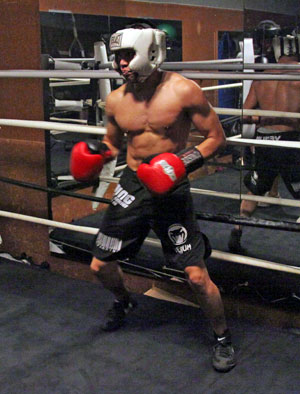
First off, why boxing?
This question couldn’t have been any easier. Boxing is a great workout, perhaps the most challenging of all sports. Requires speed, agility, finesse, power, endurance, and ultimate mental toughness. Boxing pushes you like no other, pitting the finest and highest level athletes against each other. It’s a sweet science but at the same time also a raw and brutal sport.
More importantly boxing takes you further than you ever thought possible. Boxing makes you more alive than ever, more humble in defeat, and most glorious in victory. Boxing reveals the true fighter deep inside every single one of us.
Basic Boxing Technique
Basic Boxing Stance
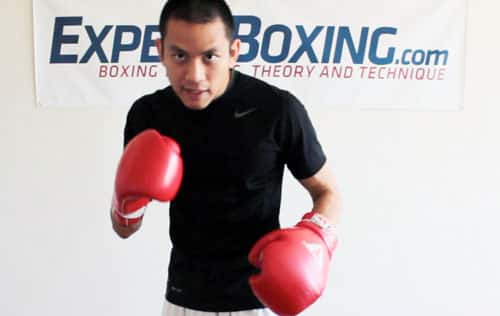
The basic boxing stance is supposed to be easy for beginners to attack and defend easily. You’re well covered in this stance with both hands ready to attack easily. More advanced fighters will use different boxing stances for more advanced body movements and counter-punching opportunities.
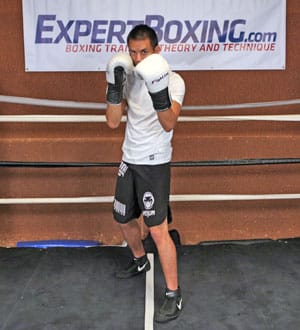
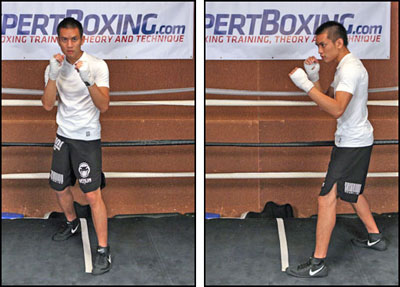
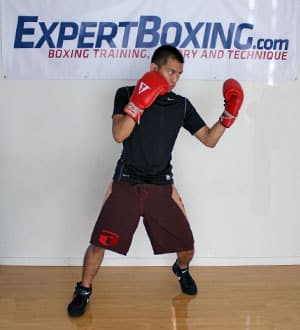
The proper boxing stance – ready to attack or defend (see video)
- Front toe & back heel on the center line. Dominant hand in back (if you are right-handed, put the right hand in back).
- Weight evenly distributed across both legs, knees slightly bent.
- Feet diagonal, little wider than shoulder width apart, back heel raised.
- Elbows down, hands up.
- Head behind your gloves, chin slightly down, eyes see over the gloves.
- Relax and breathe!
*** Get used to returning to this position after all boxing movements!
Read more guides on boxing stance:
- The Perfect Boxing Stance
- Perfect Boxing Stance Width
- Why the Strong Arm Belongs in the Back
- Deciding Between Orthodox or Southpaw
- How to Find Your Dominant Hand
- Boxing Stance 101
- Boxing Stances and Styles Explained
Basic Boxing Footwork
Beginners absolutely need to master the step-drag and pivot maneuvers. This type of movement may seem difficult at first because many people have a habit of always jumping off the ground. In boxing, you want to keep your feet down on the ground so you’re always ready to attack, defend, or move away. Also, jumping around is a huge waste of energy. The flashy footwork will come naturally once you develop better conditioning and technique.
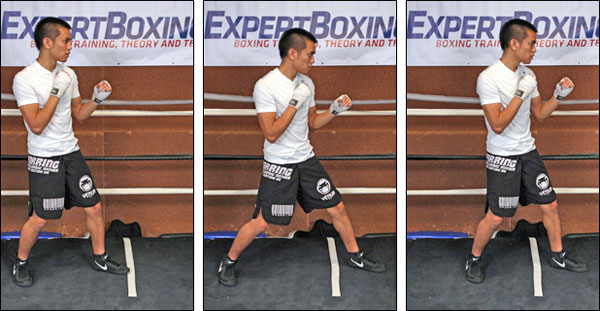
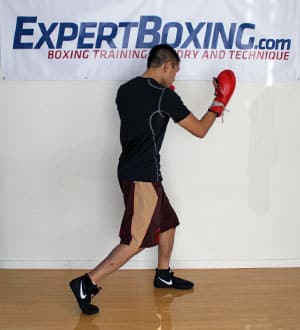
The basic STEP-DRAG (see video)
That right there is the basic boxing footwork. Step with the lead foot and drag the rear foot. This stepping and dragging boxing footwork technique ensures that your weight is grounded and always ready to attack or defend. It also prevents you from walking or crossing your feet which can make you fall off balance.
- To go FORWARD or LEFT, step with your left foot first and then drag the right foot after.
- To go BACKWARD or RIGHT, step with your right foot first and then drag the left foot after.
*** TIP: try to finish all steps with your feet at the same distance.
The PIVOT (see video)
The next most important boxing footwork technique you’ll need is the pivot. It’s usually done by pivoting off your front foot. You can use it defensively to avoid attacks, or offensively to find new punching angles. A pivot can be useful for counter-punching by taking you out of harm’s way and still keep you in range to throw counter punches.
- Pivot CLOCKWISE by swinging your right foot and letting your body pivot over the left foot.
- Practice small pivots (45-90 degrees) as well as big pivots (90-180 degrees).
Read more guides on boxing footwork:
- 10 Boxing Footwork Tips
- Basic Boxing Footwork Strategy
- Boxing footwork technique videos: Shuffle, Bounce-Step
- Boxing footwork strategy videos: Moving In & Out
- How to Improve Your Boxing Balance
Basic Boxing Punches
Basic Punching Technique
- Start from a relaxed position
- Exhale as you throw the punch
- Tighten your fist and body muscles at impact
- Release your hand back to you
Throwing punches is simply the act of being relaxed, then quickly accelerating your hand towards the target as you exhale sharply. You tighten your fist at the moment of impact and then relax the hand to throw more punches. The trick is to utilize your entire body weight behind the punch without falling off balance. Skills and experience will teach you over time.
For a beginner, the most important thing is to learn the proper punching form. Later on, you will be able to throw many different variations of punches from different positions and develop your own punching technique to fit your style.
Basic Punching Tips
- Turn your whole body and pivot your feet on ALL PUNCHES EXCEPT THE JAB.
- Maintain your stance and balance for better power and mobility.
- Make sure the non-punching hand is defending the other side of your body.
- Exhale sharply on every shot.
- All boxing punches are basically a variation of straight punches (elbow straight), hook punches (elbow sideways), or uppercut punches (elbow down).
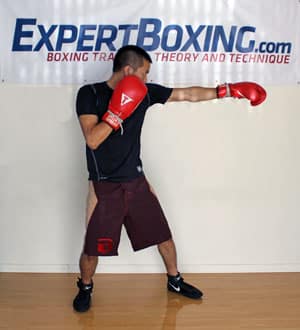
Left Straight (JAB) – the #1 most important weapon in boxing (see video)
- Keeping the rest of your body still, extend your left fist straight forward.
- Exhale sharply as you punch, rotating the fist to land with the palm down.
- Pull the hand back immediately after impact to defend.
*** Try throwing a jab with a forward step (aka “step jab”). Also try a jab to the body by bending your knees & waist slightly as you jab.
The jab is the most important punch in boxing. It can attack, defend, counter, score points, make space, and many other things. It’s your longest, fastest punch, uses the least energy, and leaves you the least vulnerable. A boxing trainer will usually tell you that every combo must start with the jab. It’s a fast punch that stuns your opponent just long enough for the big punches to land.
Great fighters have great jabs.
Read more boxing guides on the jab:
- How to Throw a Jab
- 5 Types of Jabs
- The Ultimate Boxing Jab Guide
- Jab with Head Movement (INTERMEDIATE/ADVANCED)
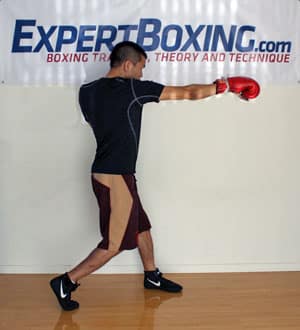
Right Straight (RIGHT CROSS) – your strongest punch (see video)
- Rotate your hips and upper body CCW as you pivot your right foot (about 90 degrees).
- Exhale sharply as you extend your right fist straight out from your chin.
- Rotate the fist to land with your palm down.
- Do not let your head lean past your front knee.
*** When necessary, the right elbow can bend to create a slight looping angle (overhand right) or even a wide looping angle (hayemaker) to come around your opponent’s guard. Many boxing trainers stress the importance of a straight right for beginners because it telegraphs less and doesn’t leave the fighter as open. It’s uncommon to see a “right hook” because it would likely be blocked by their opponent’s left shoulder. Bend your knees and waist if you want to throw a cross to the body.
The right cross will naturally be your strongest punch because it comes from your dominant hand and gets leverage easily from the back. When combined, the jab and right cross become known as the basic but incredibly useful 1-2 combination.
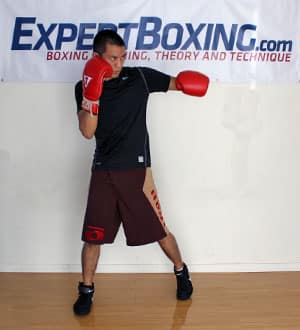
LEFT HOOK – a dangerous power punch (see video)
- Pivot your feet clockwise (about 90 degrees) as you drop the right heel and lift the left heel.
- Your body rotates as one solid block when you pivot your feet.
- The left arm tightens as you swing your left fist into the target.
*** For a left hook to the body, leave your left hand down and throw with a vertical fist.
The left hook is easily one of the deadliest punches in boxing. It comes from a side angle making it tricky to defend when an opponent is expecting straight punches. It’s also common for knockouts because the punch turns the head and easily makes opponents dizzy. You can throw left hooks to the head with your fist horizontal or vertical; for a beginner, I recommend you to use the ones that feels most natural.
Left hooks to the body are the most common way to attack the body. The “liver shot” (located under your right ribs) is known to be incredibly painful and has led to many body shot knockouts. Body shots typically take the wind out of you and kill your legs, hampering your ability to move. A well-placed body shot can momentarily paralyze your legs and keep you from standing even if you’re conscious and still willing to fight.
Read more boxing guides on the left hook:
LEFT UPPERCUT – dangerous short to long-range punch (see video)
- Pivot your feet clockwise (about 90 degrees) as you drop the right heel and lift the left heel.
- Your body rotates just like a left hook (don’t lean forward or backward).
- With your elbow pointing down, drop your left fist slightly and swing it upwards as you exhale.
- The punch lands with the palm facing up.
- Keep this punch compact, and recover to your stance quickly.
*** You can throw this punch more straight or more curved, and to the head or body.
The left uppercut is a great punch to use on the inside or even mid-range. It’s more powerful than the jab, comes fast, and can be quite unexpected. The only risk is that you have to be closer to your opponent and your left shoulder is not up to defend against your opponent’s rights.
RIGHT UPPERCUT – dangerous short to long-range punch (see video)
- Rotate your hips and upper body CCW as you pivot your right foot (about 90 degrees).
- Your body rotates just like a right cross (don’t lean forward or backward).
- With your elbow pointing down, drop your right fist slightly and swing it upwards as you exhale.
- The punch lands with the palm facing up.
- Keep this punch compact, and recover to your stance quickly.
The right uppercut is a devastating punch to use at close range or mid-range. It’s very powerful to throw at the head or body. The greatest risk is that you’re dropping your right hand and exposing yourself to a counter left hook.
Basic Punch Combinations
Basic punch combinations for beginners! Learn the punch numbering system below and then try out all the basic combinations. You can throw these combinations in shadowboxing, on the bags, the mitts, or even in sparring. Every seasoned boxer will have mastered these combinations as second nature.
1 = jab
2 = right cross
3 = left hook
4 = overhand right
5 = left uppercut
6 = right uppercut
b = body
*** Example: 1-2-3b combo would mean a jab to the head, then right cross to the head, then left hook to the body.
Common Boxing Combinations
- 1-1
- 1-1b
- 1-2
- 1-2b
- 1b-2
- 1-1-2
- 1-2-1-1
- 1-2-3
- 1-2-1-2
- 1-2-3-2
- 1-2-3b-2
- 1-2-5-2
- 1-6-3-2
- 1-2-3-2-1
There’s no rule to boxing combinations. You can throw whatever punches you want in whatever order you want. There are definitely SOME guidelines, such as throwing fast feeler punches (like the jab) before you commit to the hard shots that leave you open longer. It’s also more natural to alternate punches between your right and left hand but also a good idea to throw double lefts and double rights to confuse your opponent.
You’ll eventually learn other combinations later (some with fancy defensive moves embedded) and ultimately make up your own to fit the situation.
- Best Boxing Combo (Jab-Jab-Cross)
- Johnny’s Punching Combinations List
- How to Throw a 1-2 Punch Combination
- Breathing Techniques for Fighting
- Boxer’s Breathing Technique
- 7 Basic Punching tips
- How to Punch Harder
- How to Punch Faster
- Handspeed Technique
- How to Throw a Snapping Punch
- How to Throw a Straight Punch
- How to Throw a Shoeshine Combination
- Power Punching Secrets, PART 1 (ADVANCED)
- Power Punching Secrts, PART 2 (ADVANCED)
Basic Boxing Defense
There many kinds of defensive techniques you may have heard of out there, some fancier than others. The first thing a beginner boxer needs to learn is how to block. Blocking is the easiest way to stay in punching range without getting hurt. And for beginners, blocking is the safest way because it closes off the punching angles. Once you’ve mastered blocking, then you can move on to the more advanced stuff like parrying, rolling, and slipping. The main benefits of more advanced defense techniques is that they allow you to defend yourself without using your hands, this way your hands are free to punch back!
Blocking is the easiest way
to stay in punching range without getting hurt.
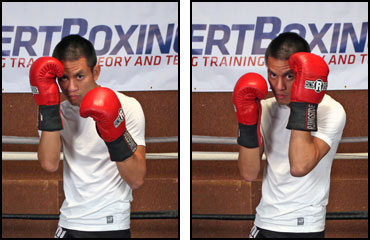
Blocking head punches
- bring your gloves closer to cover your face
- raise right glove to block left-handed punches
- raise left glove to block right-handed punches
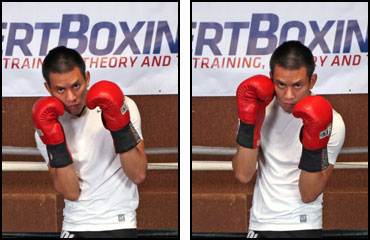
Blocking body punches
- bring your elbows closer to you
- lower the right elbow block left-handed punches
- lower the left elbow to block right-handed punches
Boxing Defense Tips
- It’s safer to cover yourself, instead of chasing the punch (which still leaves you open).
- Keep your eyes on opponent (the punches you see don’t hurt you as much).
- Stay balanced, it’s easier to block punches without getting pushed back when you’re standing on both legs.
- Fight back, the only way to go from defensive to offensive is to punch back.
- Step back, moving out of range is the easiest way to avoid all punches.
- Watch for the strong hand, if you can’t defend everything at least watch for the big punches.
Of course, there is more to blocking than simply bringing your gloves to you but this is a good start for beginners. No need to do anything fancy, or get confused about where to place your hand. Pull your hands to your face, or pull your elbows to your body.
Read more guides on boxing defense:
- Boxing Defense Techniques
- How to Block Punches in Boxing
- How to Parry Punches
- How to Shoulder Roll
- How to Slip Punches
- How to Slip Punches in Boxing
- Back Hand Guard Technique
- The Meaning of Defense
- How to Take Punches Better
- Aggressive Defense Strategy
- How to Improve Your Fighting Reflexes
- Advanced Slipping Technique, PART 1
- Advanced Slipping Technique, PART 2
Basic Boxing Counter-Punching
You’ll eventually realize that boxing is almost always non-stop counter-punching. You will always be attacking and defending simultaneously so you will need to combine your offensive and defensive boxing skills. For a beginner, this easiest way to counter is to block first and then counter immediately after. Jabs can be countered by simultaneously throwing another punch, or blocking first and then countering.
As your skills improve, you’ll eventually learn that any punch can be countered with any punch. The tricky part is figuring out how. For now, you should focus on the easier counters for beginners that don’t require high-level defensive movements.
Basic Counters to the Jab
- throw your own jab (head or body)
- throw another punch (head or body)
- blocking first and then countering after might not be fast enough to counter the jab
Basic Counters to a Right Cross/Overhand/Uppercut
- Intercept the right hand with a long jab.
- Or throw a fast left hook before or after your opponent’s right.
- Block first, then throw your own right hand.
Basic Counters to a Left Hook/Uppercut
- Throw a long left jab.
- Block first, then throw a counter right.
Read more boxing guides on counter-punching:
- 7 Easy Boxing Counters
- Boxing Counter-Punching Strategy for Beginners
- 10 Counters for the Right Hand
- 3 Simple Counters for Southpaws Against Orthodox Boxers
- 20 Southpaw Punch Combos and Counters
Basic Boxing Training
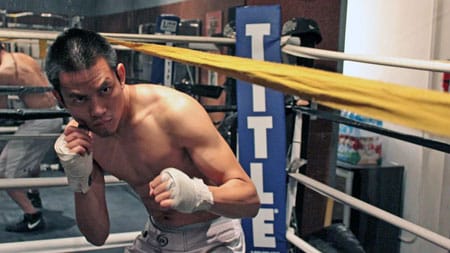
The best way to get trained for boxing is to enter a real boxing gym full of licensed boxing trainers and competing amateur and professional boxers. There you would only have to follow instructions from the more experienced guys and eventually customize routines to fit your needs. Now if these options aren’t available to you, here’s what I would recommend.
Essential Boxing Equipment
These are the absolute essentials EVERY BOXER needs to have. Sure you can borrow, but it’s gross/un-hygienic and not as safe as having your own.
Handwraps
A crucial tool for protecting your hands. Do not go around punching a heavy bag without hand protection, as this will likely screw up your wrist and injure you quickly. You should be wearing handwraps everytime that you plan to put on boxing gloves.
Having your own handwraps is like having your own socks. It will be filled with your sweat and your nasty odor. You can get away with one pair but it’s probably better to cycle between 2 or 3 pairs depending on how often you train.
Gloves
Using the community gym gloves might be ok for a while but you’ll eventually fall in love with your favorite pair. And then it gets annoying when you want to train but somebody else is using “your” gloves. Or you arrive at the gym heartbroken one day to find “your” gloves ripped open with the wrist strap torn off. At which point, you’ll realize it’s best to have your own training gloves, because it smells better, has newer padding, and always available when you need it.
If you could only have one pair, get 16oz training gloves. If you can afford to have a second pair, get 12oz or 14oz for when you want to do some speed work on the heavy bag or double-end bag. (For sparring, always use 16oz.) Smaller guys, women, or kids (below 120lbs) can train with 14oz gloves or less but otherwise I highly recommend the 16oz standard.
- Best Boxing Gloves Review
- What Boxing Gloves to Use
- What’s the Difference in Power Between 14oz and 16oz Gloves?
Mouthguard
This is a must if you’re going to do any sparring. I don’t know why there are still people out there who think it’s ok to spar without a mouthguard. Possible consequences: A) you lose or break a tooth because the impact lands perfectly on one tooth instead of dispersing itself over your jaw, which may require you to look at options such as dental veneers (see the cost of dental veneers here) or similar procedures. B) You injure your jaw (making you weak-chinned for a long time) because the lower jaw swings freely and isn’t secured against the upper jaw. Higher likelihood of concussion for you. C) You bite your tongue. I’ve actually bitten STRAIGHT THROUGH my tongue once. Imagine how painful it is to give yourself a tongue piercing with your own teeth.
Don’t share a mouthpiece either. Unless it’s molded to your teeth, it won’t give you the maximum amount of protection. Also, people bleed on their mouthpieces all the time and you might get someone else’s disease (i.e. hepatitis, aids, herpes, etc). The best mouthguards cost at least $20 but anything is better than nothing.
Non-Essential Boxing Equipment
Ultimately, all boxing equipment is “essential” if you plan to box seriously and even compete. However for a beginner just learning how to box and testing the waters, the following equipment may or may not be required. Do what you can with what you have.
Headgear
You’ll eventually want your own headgear if you’re going to do regular sparring. It’ll fit you better and always be available instead of always being used or draped with somebody else’s sweat. The padding will be a lot better since it’s not being used by 30 other people. Headgear is ALWAYS a must when you’re sparring; don’t go without it.
Boxing Shoes
Boxing shoes increase your mobility and power in the ring. This is due to their superior grip and slim material which increases your agility. You’ll not only feel better but move a whole lot better. There is no other equipment that can improve your boxing ability faster than simply putting on a pair of boxing shoes. My favorite brands are Nike and Adidas. Everlast and Rival are also ok. Title, I don’t like so much.
Boxing Training Equipment
In order of most important to least important. You’ll likely need EVERYTHING to be a successful boxer but if you’re not going to compete, then it doesn’t really matter anyway.
Gym & Trainer
The fastest way to learn is to learn from somebody who knows what he’s doing. The people and environment you surround yourself with have a great effect on your self growth. Training with trainers and better fighters will improve your skill level quickly. Training by yourself or with lower level fighters will slow your progress. With that said, being in a gym and working with a trainer is the best way to go. It will be tough and scary and out of your comfort zone but it will make you a better fighter!
Partner
A partner can hold mitts for you, spar with you, run with you, train with you, motivate you and push you beyond your limits. Boxing, like many other endeavors, is a thousand times more fun when done with others. Trying to box without a partner is like learning how to play chess all by yourself. You’d be imagining all sorts of irrelevant possibilities only to lose later when you finally face a live opponent. If you don’t like taking forever, get a partner so you can progress exponentially.
Heavy Bag
For a beginner, you’ll need the heavy bag to develop your punching form, punching power, punching speed, and punching endurance. It will probably be tons of fun for you at first because you’ve never had a chance to exert all your energy like that. Eventually you’ll move on to bigger and better things but for a beginner, the heavy bag is plenty of fun.
Double-end Bag
Awesome way to develop accuracy, timing, and hand speed. I highly recommend this as a complement or even a substitute for the heavy bag, especially for higher-skilled boxers.
Jump-rope
For $5, you can’t find a better piece of boxing equipment that will help develop your overall boxing conditioning, balance, footwork, and even punching abilities. The jump rope is a common way to warm-up, workout, or warm down for boxers.
Speed-bag
Great for developing rhythm, timing, accuracy, hand speed, and arm endurance. The speed bag is absolutely crucial for serious boxers but not truly necessary for recreational ones. If you have access to one, great.
Boxing ring
You can spar anywhere but a boxing ring is best if you want to learn how to box according to the common rules and scenarios of boxing. Having a ring helps limit the area so neither you or your opponent can run out of range. It also forces you to develop long range as well as close range fighting skills. On a more psychological level, being in a ring forces you to confront your opponent without any option to quit.
Boxing Workout
Below is a general idea of a basic boxing workout. It might be too easy for the natural athletes but also too hard for others. Do what you can and work your way up. If something feels hard to do, then you know you need to do it more. If something hurts, STOP. Last but not least, TAKE YOUR REST. Don’t be a noob and train until you’re completely sore and injured. No intelligent athlete does that, only noobs (because they don’t know how to be productive other than to completely exhaust themselves).
Boxing Warm-up
- 3 ROUNDS – run or jump rope (both are good, too)
- 3 ROUNDS – shadowbox
- stretch and move around to warm-up the body [how to warm up arms]
Boxing Workout
- 3 ROUNDS – focus mitts with trainer/partner (to develop new skills)
- 3 ROUNDS – heavy bag
- 3 ROUNDS – speed bag
- 3 ROUNDS – double end bag
- 3 ROUNDS – more shadowboxing (to reinforce new learned skills and warm-up for sparring)
- 3 ROUNDS – sparring, can be for training or learning purposes [sparring link]
- 3 ROUNDS – conditioning work, can be plyometrics, tabata drills, resistance training, calisthenics, etc
Boxing Warm-down
- 100 push-ups
- 100 sit-ups
- 100 crunches
- stretch again so you don’t get too sore or cramped for the next day
Boxing Training Tips:
- Ask for tips from everybody. it’s amazing what you’ll learn when you get advice from many different angles – there is more than one way to do things, you must learn them all (there is no “best way”)
- Eat right. It will give you more energy and speed up your recovery. Common Sense Boxing Diet
Read more guides on boxing training:
- Top 5 Boxing Exercises
- How to Shadowbox for Boxing Coordination
- How to Jump Rope for Boxing
- Boxing Jump Rope Tricks
- How to Hit a Heavy Bag
- Heavy Bag Drills
- Heavy Bag Workout
- 10 Heavy Bag Training Tips
- How to Hit a Speed Bag
- How to Hit a Double-End Bag
- Double-End Bag Drills
- Double-End Bag Training (demo)
- ExpertBoxing EASY Boxing Workout (try this great boxing workout!)
- Hand Speed Drills and Exercises
- How to Increase Your Endurance
- How to Stop Wasting Energy
- How to Avoid Getting Tired
- The Perfect Training Pace
- Most Important Muscles for Fighting
- 5 Creative Fighting Tips
Basic Boxing Strategy
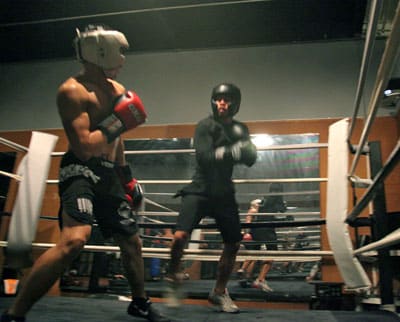
Boxing is 90% Mental
Once it comes time to competing whether in the gym or a tournament, you’re bound to run into confidence issues at some point or another. It’s natural for people to start doubting themselves at their first major failure. You start to wonder if boxing is even for you. Or maybe you feel like you’ve reached a plateau and can’t get any better. Here are some guides to help you overcome these mental challenges.
- Building Your Fight Confidence
- How to Be Great (inspirational articles) – PART 1, PART 2, PART 3, PART 4, PART 5
Boxing Styles
A lot of people ask me:
- What’s the best style of boxing?
- How do I fight like Mike Tyson? How do I fight like Floyd Mayweather?
- What boxing style should I use?
Ok listen, this is hard to explain but I’ll do my best. Here’s the thing, there really is no such thing as a “fighting style” or even “the best style”. The only style that has ever mattered is YOUR NATURAL STYLE. Which is to do things the most natural and easy way for you. In fact you don’t even have to think about style. Just keep improving your boxing technique, training, and strategy over time-and your “style” will be a result of that. What matters is that you win, not the way you look.
Your number one goal is to
always make the best choice.
And the best choice is what feels the easiest and most natural to you. A tall guy might find it easiest to fight tall. A short guy might find it easiest to find short. Mike Tyson fights the way he does because it’s the easiest way for him. He throws hard punches because he’s already a strong dude, it doesn’t take extra effort for him to BE strong.
Muhammad Ali can dance around the ring because he has great footwork. If you want to do that, you have to develop your footwork to the point that it’s easy. Otherwise, trying to be Ali when you don’t have his skills nor conditioning will only waste energy. All the best fighters you see have their distinct style because they found the easiest way for THEMSELVES to be successful. And you will have to find the EASIEST way (not the flashiest) for YOU to be successful.
Of course, this doesn’t mean your style never changes. That’s nonsense. Your skills, physicality, and mentality will change over time and so will your style. Your style will continue to evolve as new movements and new approaches in fighting become more natural to you. But this only happens if you focus on yourself instead of trying to copy somebody else. It’s good to find inspiration elsewhere, BUT FOCUS ON YOURSELF!
Boxing Sparring
I really hope that you either know what you’re doing or at least training with someone who knows what he’s doing. Sparring can very quickly become a dangerous thing for untrained wannabes. There’s a ton of fun Youtube videos of people doing backyard fights…and then when you do it, the worst happens–your nose is broken, you get a concussion, injury, or even death. These things actually do happen. Boxing is not a game; it’s a serious sport. Go slow and work your way up to full speed, this is the only safe way to learn something.
- Boxer’s First Spar Checklist
- Where to Look During a Fight
- Boxing Sparring for Beginners
- Why Beginners Shouldn’t Spar with Bigger Opponents
Sparring Drills
It’s important to work your way up to full contact sparring especially if you’re a helpless beginner. Go easy, go slow. If it hurts, then you’re going to fast. If one of you is flinching, then you’re going to fast. I recommend to shadowbox fight against each other first (mimic a fight without contacting), then going jabs only, before throwing all punches possible. It’s also a good idea to start with 2 minutes rounds at first. Getting tired fast doesn’t mean you suck, it’s a natural thing that happens to many fighters especially if they’re not used to the stress of fighting.
Sparring Tips
- Wear safety equipment (mouthpiece, headgear, etc).
- Spar with someone who will help you LEARN how to fight better (not just beat you up).
- Do not spar with anyone who is TRYING to hurt you (save this for when you’re better trained).
- You don’t owe your trainer anything, do not let him force you into dangerous situations.
- HANDS UP, LOOK AT YOUR OPPONENT, BREATHE.
- Throw no more than 3-5 punches at a time.
- You will ALWAYS get tired. it’s better to get tired punching than get tired defending.
Basic Fight Strategy
Every beginner should at least start with this basic fight strategy. You can use this in hard sparring or even in a fight. The goal is to score some points without leaving yourself completely open. You can get very far if you do this right.
- 1st round: move around and try to touch your opponent. See how he moves and see where he’s open. Learn about him and hit him without committing too much energy. Save your energy for the later rounds.
- 2nd round: you should have a feel for his rhythm of moving. Start throwing harder punches, and fight back without being reckless. Keep your back off the ropes and remember to throw punches or else you’ll end up as a punching bag.
- 3rd round: go all out. Throw your most effective punches, as many as you can. Be aggressive but not reckless. It’s the last round so work as hard as you can. Empty your tank before the bell rings.
Basic Fighting Styles
These are some general ideas to fighting different kinds of opponents. It’s not a complete guide by any means. Ultimately, you will have to improve your conditioning and technique to improve your fighting ability. As your boxing skills develop, so will your ability to handle different kinds of opponents. And even then, there will always be someone who easily negates your style.
Power puncher – either use a good defense or move alot. The goal is to avoid his punches without using more energy them him. You need to tire out so you can attack him when his punches don’t hurt as much.
Speedy runner – attack fast opponents like you would with a speed bag, not a heavy bag. That means to use fast punches, not power punches. Use many many fast punches and you’ll eventually catch him. Once you do, you can try more powerful shots.
Defensive shell – throw lots of punches and you’ll crack through. Try to get to his side or behind him before you attack, don’t just stand in front of him or you’ll get hit by a counter. Take your time, there’s no rush since he’s not throwing anything.
Aggressive swarmer – these guys can be a nightmare for beginners. You have no time to think, so all you can do is fire back and hopefully you don’t get tired before he does. Be smart and aim with good punches. Come closer to him to take away his punching space or use a solid guard to block many of his punches. Make sure you fire back to at least keep the fight even or you’ll end up as a punching bag.
Tall or long-reach – Come forward with a high guard and throw some sharp overhand rights. Try to trade punches and see if you can get them to tire out. The goal is to get into range without getting hit or using too much energy.
Short guys or duckers – if you can’t hit the head, aim for the body and work your way up. A good idea is to aim for the chest to force him to block there, then go for the head or the stomach.
Read more boxing guides on fight strategy:
- The Feel Out Process
- How to Lose a Fight (Skillfully)
- How to Beat a Better Fighter
- How to Brawl
- How to Beat a Taller Boxer
- How to Beat a Shorter Boxer
- Beating the Swarmers
- How to Fight a Southpaw
- Southpaw Guide to Beating Orthodox Fighters
- Baiting and Forcing Counters
- 5 Feints for Boxing Tricks
- What’s Your Fighting Style?
- Drowning Style – Constant Pressure Without Blocking
- Anti-Technique and Style
- Tips for Your First Fight
- How to Avoid Getting Robbed in Your Amateur Fight
Beginner Boxing Mistakes
More beginner boxing tips!
Beginner Technique Mistakes
- Letting the head lean past the knees.
- Having a tight body and tight fists when not punching.
- Letting your feet lift when you punch (decreases balance, grounding and power).
- Covering the eyes when defending.
- Having too much ego. Make sure you ask for tips from everybody. It’s amazing what you’ll learn when you get advice from many different angles – there is more than one way to do things, you must learn them all (there is no “best way”).
Beginner Training Mistakes
- Not having a good trainer, thinking you can learn everything on your own (a fighter with a coach can easily learn 3 times faster than one training solo).
- Too much heavy bag. (8 Reasons Why Heavy Bags Suck)
- Focusing too much on power (instead of speed, endurance, balance, accuracy, etc).
- Not enough shadowboxing.
- Not taking rest days during the week.
- Responsive training (sparring, mitts) is far more beneficial than drill training (shadowboxing, bagwork, etc).
Beginner Fighting Mistakes
- Dropping your hands.
- Jumping around instead of using the step-drag.
- Not looking at the opponent (especially during exchanges).
- Throwing too little or too many punches, the best combos are thrown 3-5 punches at a time.
- Reaching with punches instead of waiting until you’re in range.
- Not using the jab regularly.





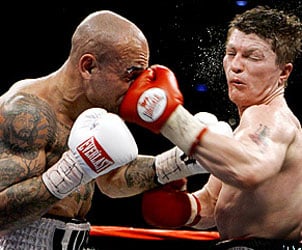
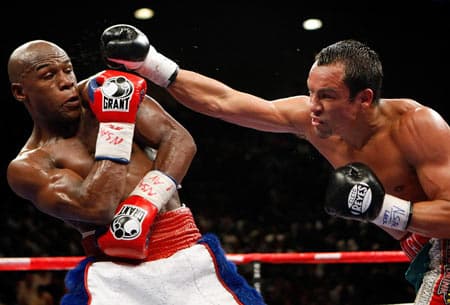
why dont you do a guide like this with body punching creating openings, splitting the guard, gaining the dominant angle of attack, throwing a opponent off balance and or making him over reach his punches.
did you see hatton get knocked out?
I did see the knockout. The body punching guide will come later.
…
Sounds cool, @curtis carpenter!
What kind of equipment do I need for boxing?
im training to go into the ufc and didn’t know where to start this article has helped me IMMENSELY thx for the help maybe one day youll see me in the octagon if and when you do my credit goes to you 🙂
It’ll really help you tbh
yessirsky
IN-CRE-DI-BLE!!. GREAT GREAT JOB TO SUMMARIZE ALL PAST ARTICLES. THANKS GRAND MASTER!!
hi johnny,
is it ok to exhale through my nose when i’m punching? Is there a difference if i exhale through my mouth?
Thanks
Exhaling through the mouth will slow down your breathing which can help you reserve more air for more punches. When you exhale through the nose, it’s easier to exhale more air and have to inhale sooner.
yeah, exhale through your nose or mouth?
This is simply the best guide to boxing we can find in the internet.
Thanks Johnny
Johnny,
A fantastic central location for all the information I’ve been digging for, but in one convenient place.
By the way, thanks for your advice – I think I might have found a gym nearby with a heavy bag that will let me train.
Keep up the awesome work!
John
incredible… huge thanks to johnny once again
John N….Thank you so much for all this material! I’m sure you’ve dedicated plenty of time and resources for completing it. Is there anyway we can make donations to your website? I know you have your shopping section, but still I’d insist on contributing some other way.
Hi, donations would be humbly accepted. Please send me an email is on the contact link (bottom of the website) and I can give you my paypal address from there. I’m really flattered. Thank you.
I’ve seen step-drag many times on tutorial but i have never see anyone using it outside tutorials. many people will usually walk around without crossing their leg or dash with their feet for fast moving in and out of range. Could you explain this?
Everyone uses it. It’s a crucial basic step that teaches you how to keep your weight grounded when you move. The thing is: pros look much more slick at it. When pros do the step-drag, it looks effortless and natural. When beginners do the step-drag, they look awkward and stiff/heavy. And so if you’re watching a pro fight, you won’t notice the step-drag because you’re looking for the BEGINNER’s step-drag.
Outstanding compilation sir! That aside, I am curious how often you run across trainees that, after a few months, develop lower inner shin splints from the combination of jumping rope and jogging 5-6 days a week (my current issue). I chose to take two months off for the holiday season to rest up as well as using the money saved for Christmas. Back to my main point, I thought I could work through the shin splints (more irritable on left than right) but this proved to be a mistake. I followed the R-I-C-E proceedures and it didn’t help much. We have a foam-rubber padded floor at my gym and I wear my runners unless I’m getting in the ring. Prior to boxing, I hadn’t been doing hardly any physical activity. I am 5’8, 155lbs., and 31 years old. Is this just a case of too much too soon? I jumped into their “regular routine” of 3 3+1/2 minute rounds with 1 minute breaks on the rope and 1.5 mile jog daily from the get-go. Any information or suggestions would be great because I don’t want to stop! I did consult the coach/owner (who is an RN away from the gym) and all I got from him was “just lay off the rope for a week”…
Shin splints are a result of many things:
– over-training
– improper training surface (too hard to too soft)
– poor footwear (shoes that don’t match your foot shape and/or force you to step improperly/unnaturally)
– poor technique (feet are turned too inwards or outwards)
You’ll have no choice but to take some time off. I used to get shin splints all the time in track and field.
Thanks J
hey i am an accomplished high school hurdler, but i am interested in boxing and do not want to wait until i graduate to start. will boxing help my speed or strength on the track or would it be working my body in a completely different way? thank you for your time.
Lay flat on your front Nick come up do your knees are off the ground some what like a plank and lift your ankles so your laces face the ground, don’t t to much pressure. But that will stretch you
r shins,, try it’s :
My apologies for the spelling I’m on an android
This website is definitely encyclopaedia on boxing technique.
Hey Johnny, I’ve been keeping up with expertboxing for years and want to say thank you, so much good advice and info here! I really wish you lived in Australia so I could come and train at your gym hahaha
On a more serious note, I was wandering if you could an answer a question about overtraining.
I’ve been boxing for 3 and a bit years, 2-3 nights a week with kickboxing/normal gym work on the other 2-3 nights. For about a year now I’ve also been doing morning sessions 4-5 times a week, and my training has been geared towards amateur comps for about a year too. With the the odd few days off with injuries/sickness, I’ve not had more than a week off continuously for about 2 years.
The past month or so I’ve been trying to give it 100% like always but it just isn’t there. My diet is pretty damn good and I get decent amounts of sleep every night. It has begun to feel like I’m not tough enough anymore, that I need rest because I’m not cut out for boxing. I’m in my early 20’s too, so I don’t think my age should be affecting me yet.
In your opinion, should be taking a little time off to rest and recover? Have you felt the same way before, and if so how did you push past it?
Thanks in advance mate, keep it up!
Jonny,
Just a quick note; I went through something similar my second month in and I’m the type to give %100 in anything I do. One week I noticed that I was tiring out and not able to perform as well as usual. I consulted my coach who discretely obseverd me that day. Before I left, he asked how my water intake was because he noticed I was hardly sweating despite my usual efforts. I told him that I hadn’t really been paying attention to it. He informed me that I should be taking in about a gallon (just under 4 litres) a day. I followed his advice and was doing much better the next week.
Whether it’s mental or physical, you obviously need a rest. Even pros don’t go 24/7/365 at 100% everyday. Learn to cycle your training and give yourself breaks. The breaks give you time to realize things and your muscles to come back stronger.
hey
its me again i was wondering if you have an article on dirty tactics in the ring.
No, I don’t. But maybe I should.
Hey Johnny, I need some advice… I am a 18 year old short and muscular guy. I’ve been kickboxing for a year and then i switched to boxing, i have been boxing for about 6 months but with big pauses, like 2 months of training and then a pause of about 3-4 months. Now i started again and even though i am a very fit guy , with more punching power, speed and stamina than most of my opponents, i still get my ass kicked in every fight, and my trainer doesn’t even bother trying to correct me because he thinks that i’m too old for boxing. Another problem is that at my gym all the people are assholes who doesn’t know what sparring is… so in every “sparring sesion” we actually end up fighting for real , because they want to feel like they were the winners… So when we are training (like working the heavy bag, shadow boxing, running, power training, you know…) I am superior to most of the guys in the gym in terms of punching power , stamina, technique, punching speed and even motivation , since i always train hard and give 100% to whatever I do, but when it comes to fighting i get my ass kicked… I need to find out what i do wrong and start winning matches so i can prove my trainer that i’m not a lost cause and start competing…
Here’s an example of a fight of mine: Bell rings — I throw a jab — opponent blocks or backs away from it and strikes back with a jab of his and then follows up with a lot of punches so i cant defend myself or even strike him back — I usually cover up (ending up covering my eyes too…) trying to get inside , since i am like always the guy with the lower reach , taking all the punches while he backs away and keeps hitting me…
Please help me find what i might be doing wrong , my trainer doesn’t give a shit about me and i got to figure it out by myself so i need your help… It is my dream to become a good amateur boxer and start competing… ***sorry for the wall of text and thank you for your time if you’re going to reply (please do)***
I think your obvious problem is a lack in skill. Now if you’re really stronger/faster than your opponents as you say you are, then you better use that to your advantage (because they’re obviously using their skill advantages against you).
Since fighting is the way they do things in that gym, you should just knock out one of the fighters to get your coach’s attention. Otherwise, you have no choice but to continue getting beat up or go to a new gym. In the meanwhile, it might be a smart idea to work more on drills & skills rather than mindless bag work & conditioning.
Too old for boxing at 18? That’s pretty ridiculous. Bernard Hopkins started at 26, and look at him. I would say, ignore what your so-called “coach” says and keep on moving. Or better yet, find another gym.
As for fighting…I would say that you need to work on keeping your distance with footwork. Don’t cover your eyes for Pete’s sake! Trying to stay inside (or anywhere) without being able to see your opponent is asking for a knockout. If you’re going to try and fight in the pocket you just have to start throwing punches and use your superior punching power etc. Try to relax and don’t freeze when you’re being punched at. Look for openings. Remember, every time he punches he leaves an opening, so take advantage of it!
Thanks Keitharino, it seems you understand what i’m talking about. Sadly i can’t find another gym because this is the only boxing gym in the city… but I’m going to work on what i need to and prove my coach he is wrong.
It’s been over 2 years of training my technique, punching power, etc, but the lack of sparring is showing up now and I easily get lost in a fight, becoming a punching bag for my opponent… but as I said, I’m going to work on what i need to and I’m not willing to give up.
Duracell check this story out
I too started out in rural town in Southwest New Mexico. My heavybag was hung between two trees and my speedbag platform was attached to the Clothes line (when people used to hang clothes to dry). We had a 14×14 concrete slab that I would invite all my buddies to so we could spar. I also sparred with my dad alot. It doesn’t matter where you come from, no excuses, if it’s in you you will find a way to make it work for you. In 2008 I was ranked #8 by the WBC and currently have a record of 18-4-1 (12 KOs). It has not been easy but growing up in a small town is no excuse not to follow your dreams. If you want it bad enough, you will find a way to make it happen.
Joaquin Zamora
He told johnny this in one of Johnny’s articles!
Thank you for the fast reply. Isn’t working the bag the same as working on drills? and what do you mean by skills? Sorry, English is not my main language ,i learn it at school so i can’t understand some terms.
A bag can be used for developing technique or developing conditioning, or even both. My point is to focus more on the skill aspect.
SIR I REALLY LIKED THIS WEBSITE OF YOURS. I AM SO CRAZY ON BECOMING A BOXER. THANK U FOR GIVING LOTS AND LOTS OF INFORMATION ABOUT BOXING. IF YOU CAN PLEASE CONTACT ME.
say johnny my friend has his books, he said usa boxing going to change the rules for the amateur boxing. they are switching to a 10-9 scoring system, have you heard anything about this and what are your thoughts?
I did hear about this and I think it’s an interesting change. I think the biggest problem with the scoring system is corruption, not necessarily the scoring system itself. Whatever rules the organization uses, it has to abide by them. If they’re going for points, then they better count the points. If they’re going for effective aggression (like in professional boxing), then they better abide by that. No scoring system is going to solve the problem of corruption and politics but we’ll see.
this may be off topic but i have been wondering about power in combinations.
I have just started sparring at a gym and i have only been training for 2 months. My coach says im way farther than most beginners but i still have a lot to work on. One of the things is being able to punch through my target and my whole misunderstanding of power in my combination punches.
The next thing is, should i be utilizing power in every punch for a combination or should i use it for the one punch i feel i can tag him with?.
This question is far more complicated than you think. Because you’re a beginner, I’ll give you beginner advice. You can throw power punches in combinations only if they land. If even one misses, you’ll probably swing off target. Which means you should only throw a hard power shot when you know for sure it’s going to land. Otherwise, committing to a big shot could leave you vulnerable.
If you ask me this question 2 years from now, I’ll probably tell you something else.
Got any tips on finding a sparring partner? Is going to a boxing gym the only option? Thanks!
Well, if all you need is a body then any person will do (friend, local martial arts club). If you want a skilled sparring partner who can push your limits and teach you things, then you’re most likely to find them in numbers at a boxing gym. MMA gyms are another option.
Johnny i absolutely admire how you never look down on peoples questions, even tho they may seem so basic to you, you still answer with positivity and well guidance, thank you for treating the beginners and showing us all what hard work and dedication is all about 🙂 your the man sir! now closing with the utmost honor integrity respects and loyalty
Duracell check this story out
I too started out in rural town in Southwest New Mexico. My heavybag was hung between two trees and my speedbag platform was attached to the Clothes line (when people used to hang clothes to dry). We had a 14×14 concrete slab that I would invite all my buddies to so we could spar. I also sparred with my dad alot. It doesn’t matter where you come from, no excuses, if it’s in you you will find a way to make it work for you. In 2008 I was ranked #8 by the WBC and currently have a record of 18-4-1 (12 KOs). It has not been easy but growing up in a small town is no excuse not to follow your dreams. If you want it bad enough, you will find a way to make it happen.
Joaquin Zamora
He told johnny this in one of Johnny’s articles!
Thank you for sharing your motivational story with me, Joaquin. I know there is no excuse for someone to not pursue their dream. As long as I am alive and I have a dream to follow, I’m not willing to give up.
Check out Joaquin Zamora EXPERTBOXING!
https://www.youtube.com/watch?v=Vm_jHD3mHHQ
Johnny, what is your prediction on the outcome of the 4th fight by Manny Pacquiao VS. Manuel Marquez
I honestly don’t know because it’s such a close fight.
All were excellent. Severe your link.
Random question: I am attending a MMA gym that teaches boxing and thats all i want to learn. The gym always has the same people, all of them are pro mma fighters and no true boxers. There are virtually no beginners, just the same 5-6 pro mma guys. The owner is still fighting and is in his late 30’s so he trains with them. I have to pay $300 for 15 sessions (basically train 15 times with him) in the hopes of gaining technique but all i have learned are new drills, no technique. Sparring isnt an issue but im not learning anything new. Basically im seen as another guy in the gym, more so a new kid. All i do is go in and hit the bag, there are no classes, and the supposed head boxing coach always looks at what i do and laughs. I ask him what am i doing wrong and he says sarcastically “nothing”. Should i continue this little game or part ways and find a better gym? I have been on the prowl for a good gym that actually teaches for 2 years and no dice. Im in Georgia.
If you don’t like the gym, you’ll have to go elsewhere. If there’s nothing else in your area, you’ll have to move elsewhere. Look up the local amateur boxing shows and see where the teams are located.
Hi Johny
I’ve been learning to box now for six months the first 3months were spent trying to get my fitness up and learningbthe basics.
I’m now sparring but my coach has pointed out i need to fight using a heavyweight style. I am 6’3 100kg.
I have been learning with much smaller faster guys and have been trying to emulate their style rather than use size/weight/power/reach to my advantage
Are there any specific skills and drills and explanations of ” heavyweight style” boxing. I am working on my jab and standing tall which is giving me great results against the smaller faster more skillful guys but isn’t reaping any rewards when I spar with bigger heavyweights ( i still get owned by big powerful jabs)
Can you help illuminate
Many thanks for an excellent website
I honestly don’t know what your coach means by “heavyweight style”. Maybe he means a tall fighter’s style? I recommend heavyweights to do all the same drills as any boxer. Watch Lennox Lewis spar and you’ll see he’s a very big but still very agile guy.
To Johnny N,
Thank you so much sir! I have been a big fan for boxing for over 3 years now and have been trying to get involved in the sports for this time and have been struggling. as there is no gym in my area I am left with no options. your guide will help me greatly!
I’m sorry to hear about your situation. Keep looking around at local clubs, maybe the MMA ones. You might also want to check out my boxing course “How to Box in 10 Days”. It would be a good fit for someone like you.
Do you have any dumbbell workout tips?
Use really light weights and only do slow motions with them.
hey johnny can you write about how to throw a right hook properly..thanks
Yes I can!
Hey johnny,
I’ve been reading a lot of your articles and watching your videos. I think they are really great and has inspired me to get into boxing. I use to be really into weight lifting working out 5 days a week 1 hour a day. I use to workout at home never wanted to join a gym because of it being crowded and expensive to join, but now I’m bored of lifting and can’t motivate myself to get back into it. I’m wanting to try something new and get into MMA. I’m interested more so in boxing because I like how boxers are so quick on their feet and so good with their hands then other styles of stand up, and the fact that I can’t kick that high. I’m not doing this to go pro or anything but more so for a workout and staying in shape. For that reason I’m also not wanting to join a gym but get the necessary equipment to workout at home. I was wondering if you do any workouts at home and if you could write an article or video of the equipment you would need to do so? Also if you could do videos of a full one round of your workout? Videos that shows one round on heavy bag, speed bag, double end bag, shadow boxing and etc. just for those of us who are beginners who want to see what it should look like. Kind of like a workout dvd and your our own trainer for us who want to do this at home for a workout. I know that’s a lot to ask and i’m sure your busy enough as it is but I think it would be great idea and a lot of people would be interested. Thank you again keep up the good work.
Watch all my Youtube videos and start from there!
Hi Johnny,
1. Basically just a begginner and having trouble relaxing whilst training, always very tense and whilst being tense all the time i run out of energy real quick.
2.How do you practice punching quicker without loading up? When im told to snap the jab out i just naturally load up to speed my punches up and having trouble loosing this bad habit?
Keep training. Beginners will have to spend some time before you get any good at it. Boxing is hard! Learn to relax by doing more slow relaxed shadowboxing.
Thanks so much Johny…….Your articles are magical……….And I’m so impressed everything in one thats what everybody wants
Do you have any articles on the step-drag technique?
No but I do have a video on the step-drag. Watch it out here: https://www.youtube.com/watch?v=dHUutXudf8o
Don’t forget to subscribe to my Youtube channel! 😉
Ohhhhhhh. Okay. I do that while I box and train already, I just didn’t know what it was called. I thought when I heard the name it was that, but I wasn’t sure. I do that when I throw like a stepping jab or a lunging hook.. Is that a bad habit? I always find more power that way.
&&I’ll be sure to subscribe. Thanks Man!
If there’s a purpose, and you find the purpose to a move, then it’s a logical move and no longer a bad habit. A bad habit is when you don’t realize you’re doing something and that the thing you’re doing is giving you a different effect than what you were going for.
Great site, I’m coaching some 11-15 year olds at school and this will be an excellent guide for us to use. Thanks very much.
Hi Johnny,
Great article and I appreciate your time and effort in sharing your boxing knowledge. I want to train my midsection. Do you have any tips how to train my midsection that is functional to boxing. I started training this year and I really enjoy boxing. How I wish I was 10 years younger. I am 28 yrs when I started to have a formal training in this sport. Thanks and God bless.
Well…there are a ton of core exercise routines. You can look them up online and try some. All core exercises are pretty functional to boxing. Some more so than others.
Yow johnny i have an important question. i have a poor eye sight about grade 200 nearsighted and in sparring its a bit hard to see punches coming without my glasses, may know if i can use contact lenses in sparring, because i have an upcoming fight this may 26 so, may i use contact lenses in fighting?
Yes, you can use soft contacts for sparring. I wear them myself and my optometrist says they’re perfect for that.
o thank god men, by the way what is your grade in the eyes?
3.75 in the left and 3.25 in the right.
BTW its my firs amateur fight xD
Hi what would you recommend for my grandson to learn via video /s
You can check out my instructional guides for sale on this site and also the free videos on my youtube channel.
hey there! love the guide,
also what kind of weight training do you recommend?
Very minimum light dumbbell weights as most for beginners. Calisthenics are more important for beginners.
I just starting boxing this year n this guide is really helpful. I was wondering if u have any advice for me because I am really skinny n really want to bulk up thnx again!!
Being skinny is actually a good body type for boxing. If you want to bulk up, be a bodybuilder.
Is it ok that I can only do a 20-push up, run for about 9 minutes and train with my boxing gloves(A pair of cheap Everlast gloves unfortunately)? Also, there aren’t many boxing gyms and good equipments since boxing isn’t popular in Vietnam, what am I supposed to do for the time being? I’m 17 by the way.
Do what you can. Everyone has to start somewhere. Keep improving what you can do and go from there. Good luck, Kim!
Hi! I’ve just recently taken an interest in boxing and my 13yo daughter and I are looking at boxing lessons. I’m over 40 and if fairly good shape but I’m wondering what to look for in a boxing trainer for two girls 😀
Love your site and have already learned a lot! Keep up the great work!
You’ll have to go through several gyms until you find an atmosphere you like. Preferably, find one with other women in it. Good luck, Becky. You’ll both have fun.
Hey Johnny
How can a person develop the ability to see all the action that’s happening when watching a fight. It makes me feel slow when I hear ringside commentators that have NEVER fought , much less sparred explain BOTH fighters every move down to the last detail. Any tips on attention?
You learn how to watch fights by being in them yourself. After you’ve felt certain things in the ring, you’ll know how to look for them when you’re outside the ring. Don’t worry about the TV commentators. Most of them are just guys with journalism or communication degrees or hookups and have probably never been in the ring. They only mention the obvious details and don’t commentate the way fighters would when they talk to each other.
Johnny; Thanks so much for your videos and expertise. I am 57 years old and my son recently dragged home a heavy bag and so I have gotten hooked on working out with it. I have been working out for a bit under a month and am up to about 25 rounds per week. I am working on snapping my jabs, keeping my hands up and learning hand speed. Soon I am going to try adding combinations. I usually throw thirty left and right jabs per round along with some rapid intervals. I am trying to pays arrention to head and feet movement too. I augment my boxing with training for a road race (10K). Right now I am focused on learning technique rather than power. I am not sure where I want to take the boxing but it does help with confidence and conditioning. Any additional advice for an old but game guy? Thanks again. Your videos are wonderful teaching tools!
Train in a gym. There’s so much inspiration from being around so many hardworkers and potential champions. Keep boxing!
Thxx a lot man… I learned the basics I.e mentioned above… Ill jus practice thm in shadow boxing and on a heavy bag… There’s no gym here man :/.. And I can only afford a heavy bag… So how’s tht 🙂
I’m one week away from what seems like my first fight ever. No exp. whatsoever. All I do is weight train run and am 197 5″11 good shape. I only have looked at your videos. And I think I can fight. Lol. Yea ok. No training for boxing at all. What am I gettin myself onto. I guess you gotta start somewhere. Get my feet wet. It’s a competition on seeking potential boxers. Whoever competes good will be considered to training. Well. Here goes Johnny the experts videos. I’ll put all the advice in effect.
I hope you do well! Let me know how you do, Randi.
Randi..Of course we have to start somewhere, but if I were you, I would have joined a gym and had the guidance and experience of a coach along with the proper training and sparring. Not the right way to go about it, but It’s your call, bro. Good luck.
I want to start boxing, but don’t have the money to join a gym, is it possible to develop my skills at home without the guidance of a trainer?
You’ll improve if you definitely keep working at something. With that said, learning at home without a trainer would be 10 times slower compared to someone training at a gym.
The most definitive, the most extensive article on boxing for beginners. I learned so much from this.
This will help me become better in boxing.
Hi Johnny,
Just wanted to drop a line of thanks for all the outstanding content on this site.
Like many, I’ve spent years pushing iron in my garage and switched from lifting plan to lifting plan to stop boredom creeping in. More recently, I’ve started to train for better conditioning and bought a 4′ bag and gloves to beat on to build up a sweat.
I figured that as I was hitting this thing, I may as well find out how to do it properly and found this site. I’ve spent the last few days reading as much as I can and I’ve fallen in love with boxing! I knew boxers were fit but I’ve only appreciated HOW FIT after a few days working the bag with simple jab and cross combos (thanks so much for the videos on stance, footwork and pivoting; my throws are weak and slow but I’m building it up bit by bit), bodyweight exercises and jumping rope (I learned how to jump rope a few years ago but haven’t used it consistently). I got my ass handed to me with 50 (yes 50!) push-ups. So much for benching big!
I’m determined to build up my conditioning. I’ve ditched the toy gloves and ordered a decent pair along with a double end bag and started looking around for local boxing gyms.
Can’t wait until my next workout, thanks!
Welcome to boxing, Matt! It’s certainly one of the most challenging exercises you’ve ever tried. Keep working at it.
Hey man, if you keep your body and arm completely relaxed will your fist naturally tighten at the moment of impact, or is it something you have to learn how to do.
Hi! Glad to see this website! I am very new in boxing and I could say I am extremely enjoying it.. 🙂
Much love from Dubai
Thank you John for all the information you punched in here! 🙂 🙂
Hahaha, very clever. Thanks, Thesa. 🙂
Hi Johnny,
I’ve started boxing at uni (so far 1 session) but I’m having trouble keeping on my toes and bouncing while still throwing out punches, ducking and blocking. It’s very tiring and heavy on my back leg. Do you have any tips since the pictures look like you planted your feet.
Look forward to your response
Nathan
Staying on your toes and bouncing is definitely tiring. It’s far more work. Stay on the ground more and take smaller steps if you’re going to be moving around a lot. The more you want to move, the more you have to relax to allow your body to move easier.
Hi, this is really interesting. I am 21 yrs old.5’10” wgt 49 kgs. I want to learn and practice boxing. somebody says my DNA might not allow me to improve my physique. I am total beginner in case I start to box and workout exercises. And I couldn’t find anyone boxing in my town. Someone help me, i am waiting to hear advices…
Somebody told you your DNA might not allow you to improve your physique? Ahahaha, oh man please slap them and tell them to pull their head out their ass lol. ANYONE can improve their physique, and certainly everyone can get fitter, as that’s what the human body is built to do. Even if you’re a ‘hardgainer’ (thats what bodybuilder’s call skinny guys basically) you can definitely improve your physique through boxing training, I know this because I am one myself and it’s had a huge impact on me 🙂 Go for it buddy, dont let anyone tell you your ‘DNA isn’t good enough’ or some bullshit, probably jealous they’re too lazy to do it themselves so they attempt to pull others down with them. Also if you’re a beginner that’s great, it just means you havn’t picked any bad habits up yet 🙂 If you can’t find a gym (starting off in a certified gym is preferable IMO), just start off doing some sit ups and pushups every day, then maybe get a heavy bag in your garage or bedroom ect. and when you’ve caught the ‘fitness bug’ you’ll be trying new things out yourself just for the fun of it
Thanks Mister T. I’ve already started to workout. I have down rope jumping ( with multiple times of tripping) for 10 mins and dumbbell workout for biceps and some body weight squats. My toe skins are teared and my knees really hurt. I know no pain- no gain. So please guide me and encourage me..
Maybe don’t jump rope with bare feet? How about wearing some socks or shoes?
Hi Johnny,
just want to say thanks for this in depth guide for beginner boxing. It sparked a genuine interest in boxing. I will be looking into taking boxing sessions in the near future.
Martin, that’s great news to me. Good luck and have fun boxing!
Hello, I took up kickboxing a few months ago and found this website incredibly helpful in kickboxing as well. Thank you for posting a lot of good information. BTW- I’m interested in translating some of your postings into Korean so that many Koreans can also benefit from your website. Then, I’d like to post them on my blog if you don’t mind. Let me know what you think about this, please.
Thank you so much for the offer, Billie. I’ve sent you a private message.
I have been in boxing classes for a year already but for some reason i just haven’t gotten the hang of head movement. It feels really awkward to me and I just can’t seem to loosen up. What can i do to improve that? I really want to be prepared for when i have my first fight, I’m a girl and I don’t think i want to go pro, but i do want to do amateur fighting later on. Any advice?
It sounds like you need more than “boxing classes”. Keep working and training on things as much as you can. Some movements can be very awkward. I have several videos on Youtube you can watch for head movement. Go through them and try the different suggestions I make in the videos.
really great tutorial on boxing this will make me great at it im happy you showed them now i can train real good and improve my boxing skills
Hey, I can’t clarify this one, how much energy we lose when having sex or musterbating. would my weight (muscle) gaining programme get affected by this, i.e if I have to eat 500 cals more in a day with a light workout, having sex or mstbtn would affect this? Two more questions what should be the time gap between workout and breakfast for weight gaining morning workout?
Is kickboxing an advanced version of boxing?
Eating more food will not revitalize the energy lost during sex.
Time gap between workout and breakfast–don’t look at it like that. If you need to eat, EAT!
Kickboxing is a different sport. It has more weapons than boxing, but it’s not more advanced. Boxing has less weapons and less complexity it seems but in fact goes far more into detail in all the tiny nuances of technique and strategy.
the beauty of pugilism…i’m a Johnny N too…Scotland.. Glasgow. Came across your page by accident….enjoyed it thoroughly, gravitas to you Johnny
Hi I just turn 26 can I start boxing and become a good boxer .I really like boxing and I think this is the thing I should do its late .how many years you need to become a good boxer cheers
Probably at least 5.
Hey I just wanted to thank you for all you hard work putting this site together and sharing your boxing knowledge. Greetings from Australia
thanks your guide is nice and detailed!!!!!
Hi Jonny, thanks for this fantastic guide and all your videos.
I am a 26yr old girl and began boxing about half a year ago, but in French which is not my best language, so it is great to see some things clarified and laid out so clearly. I box in a welcoming but totally guy-dominated gym, and was wondering if you have any plans to write a guide for girls?
Thanks again. I have totally fallen in love with this sport and wish more girls would give it a go!
Aack, sorry I spelled your name wrong Johnny.
I do have plans to write a guide for girls eventually, Anna. Hang in there and please don’t beat up the boys too badly! 😉
Hi Johnny!
I ended up writing one myself: let me know what you think!
http://www.annahartleywrites.com/essays/#/punch-drunk-love/
Hey Anna, sweet write-up! I enjoyed reading it. I loved all the little details you put about how males look at females in boxing gym. 🙂
Hello Johnny. My name is Irvin and i want to get back into boxing again. I trained for a bout a year and a half but I havent been able to train since May of last year. Unfortunately, I’ve lost quite a bit of my technique and skills. However, I do run cross-country and track and I’m ok to say the most. I really want to get back into boxing but I’m at a bit of a situation nowadays. Is there anything I can do to help regain my boxing skills? Any help would be appreciated.
I would recommend going back to the gym and starting with the basics again.
Ok, thanks for the help. If I can’t go to the gym, what can I do? As of now, I’m unable to go to a gym due to financial situations. I mean, I shadowbox in front of my mirror at home and I run but that’s really I can do as of now.
You’ll have to be creative…maybe find or start a boxing club at school or with your friends. Find a way. Or offer to do some clean-up work at the gym so they let you train there a few hours. I’m sure many businesses would love to have a helping hand.
Hi Johnny N
I love your articals ! so im a 13 year old boy I have been boxing for about a month now I need some advice on weather I should buy some boxing gloves but not sure which ones im quite small with small hands haha. And also when do you think I spar im not sure as I am so young !
please email me AS Soon As Possible thank you :}
Check out my guides on boxing gloves and go from there! Good luck to you. Boxing is a fun sport.
I’m small too and looking for someone my size to spar with. Wish we lived near each other
if you’re a smaller fighter, thats a really useful advantage. your opponent cant see the punches coming. search up mike tyson or joe frazier. short heavyweight fighters but used their height to their advantage. the best video on mike tyson is by boxing legends tv on youtube and its called mike tyson-amazing speed as its highlights of all his skills. not too sure about frazier videos tbh with you. head movement and explosive fighting is the way forward for you. stay low so the guy you’re fights hand and punching down then come up as your opponents face is open. body body head. good luck
First of all, I am well impressed with your 30 day fighter’s diet Johnny, a damn fine guide (from purely a fighter’s perspective) and I will purchase your boxing instructional guide in a 2/3 months time too (when I’ve got my diet sorted out and my KFC spicy Zinger Burger addiction and spicy chicken wings fixation under control 😉
I did a search on ‘How long should a boxer train’ on the Internet and what came back was a whole wealth of “How long is a piece of string?” type answers. I then put in something like ‘How long to train for?’ in expert boxing’s search bar and I couldn’t find what I was looking for, although it is no doubt on this site but worded differently and I’ve yet to stumble across it. So my question is . . .
How many hours do amateur and/or professional boxers train for intensely per day? I’ve seen comments ranging from 20 mins up to 8 hours. (I’m purposely ignoring the 8 hours advice as it would kill me lol) Should this be split or done in one intense block? I’m interested specifically on how much training competing amateur boxers do per day and at what intensity. I’d very much appreciate it if any competing boxers could answer this question. (Not interested in low intensity training here).
Any comments replying to my question here would be appreciated. Yeah, it might be a ‘As long as a piece of string/how comfortable are you?’ answer etc. But I’d really like to know what training times people feel comfortable pushing themselves to personally are in reality, even though it may differ form person to person. Working a job is a big factor, so it would be interesting to know if the times are when working or on days off.
So, in a nutshell, although I already know that there is not a specific answer to this question – how long do you push yourself to train for intensely per day? And for how many days? And why have you decided on this time per day schedule?
Cheers. 🙂
Kevin, I think your answer is complicated as you already know. How long does a person workout in the gym for? It could range. Same with boxers, even competing boxers. Some spend only 2 hours, some spend 5. I imagine somewhere in between is a solid range. As for splitting it up, some do it all at once. The usual routine is to run in the morning and train in the afternoon.
Thank you Johnny, this advice helps me out as I now have a rough guide for how many hours boxers in general train for & most importantly it gives me a rough gauge on how many hours my future opponents might be putting into training. Much appreciated.
This is a great article.
I have a rather unusual question for you – do you know of any resources for people with specific disabilities who would love to box?
Here is my issue – I have a specific disability that means I cannot take body shots. Can’t do it, period! It would put me in the hospital or kill me (ostomy, research it for more info). But I love boxing and Muay Thai, and would love to be able to actually spar or even compete in a setting where they have allowances for specific issues like this.
Have you any knowledge of groups like this, or specific protective equipment that could help someone like me?
Great article, great site. Thanks for all the work on here.
Wear a huge body shield shield and go for head shots only. I don’t know of any other resources but that would be my best recommendation. Perhaps you can also ask your doctor about this.
Hey Johnny!
I just finished all 8 days and am going to redo all of them again, they really are killers! They already made a LOT of improvement in the way I stand, move, and box. I can feel the improvement in my balance when I throw punches while moving in shadowboxing and sparring as well as leg speed and precision, and also my punching power! I was surprised myself to see how they’re getting more snap and power after doing all the core twisting exercises you showed and I’m sure I’ll get even more if I continue doing those exercises. Those $84 are worth it just like you told me, I’m glad I purchased your program!
I’d be happy if you could help me by giving more information regarding those drills such as how they apply when you box, you did explain some of them but some are left unexplained. Although I already felt the results, I’m sure I’ll gain more skills and knowledge when I understand how to apply them in a fight, be it for punching or moving in and out of range.
Overall I’m really happy with this product, it really is awesome and worth the money! Thanks a lot Johnny, keep up the great work!
Hi Kevin,
Thank you for the awesome feedback. Do let me know which drills you were confused about and I’ll be happy to go over them with you. I know it’s so much new stuff that many people have never seen before.
Johnny
Awesome article Johnny N! The best Boxing Blog on the internet, hand down. Thanks for breaking everything down and keeping it simple.
Will you update this with the newer articles please?
Hey Sean, I’ve got more on the way!
Basic can’t abdate
I must have driven you nuts Johnny with the question ‘How long should a fighter train for?’ and now fully get it that the question should have been ‘How long can I train for?’
I am terrible for over training and going to extremes. So I was looking for a sensible cut off limit, but that’s also elusive because it depends on so many factors. But, most importantly I get what you said about looking to train as often as you can – much more positive and driven than ‘How long does a boxer train of?r’ which by contrast is pretty weak and lazy sounding.
In a nutshell: ‘I get it’ 🙂 Boxing like any other skill needs dedication and passion. Time spent doing what you love shouldn’t be even a factor to consider at the end of the day, just do it.
Great website and you expose the sport of boxing as beautiful as it always has been by focusing on nuances and approaches that can only be picked up on by someone who loves and analysis the sport in detail with passion.
A big thank you for helping me so much with your insights about this fun sport.
Cheers buddy 🙂
I agree with your changes in attitude, Kevin. It’s true that “How long does a boxer train for?” sounds like a lazy guy trying to get away with the bare minimum.
hey grand master your training is best.i want to learn boxing and become boxer at home so can you guide me how to train at begginer level at your website.plzz tell me what should i learn stepwise and what should i learn before and what should i learn after.their is no one in my area to give me training related boxing.so plzz plzz give me training related boxing.its my dream to become a boxer
Well you’re certainly on the right article. If you’re looking for more specific step-by-step directions. You might want to try my premium guide called, “How to Box in 10 Days”. It’ll give you the exact roadmap for building your boxing foundation.
Thank you so much for this site! I’m in my 40’s now and starting to get back into shape. This is great inspiration to get in the best shape of my life and have some fun doing it. I plan to get your videos and books, and find a local gym. When my sons are old enough, I’d like to make it a family thing. What age do you think a child can start learning to box?
Children can and should learn from any age. Don’t let them spar until at least 8 years old. Don’t expect “HARD TRAINING’ until they’re about 13. Keep things fun and light and they’ll build a lifetime of passion for the sport.
my name is kingi garner .and im a great street fighter cuz im from the streets and a very bad place but thank god im still around.i have had somuch pain happen in my life and I got a real story to tell the world im 63ht 170 pounds.very fast and I got lots of power that’s what everybody tells me.im 32 but look and fill 27 lol.and I got a great body I just need somebody to help me cuz I have no where to go in my life and I no I can be the best in the world if somebody could just help me or just see me fight I wont let you down I came way to far to let me or anybody else down.everythin I love have been tookin away from me now I stay alone just waitin on that day to show myself to the world.so if anybody out there that can help me please give me a call 252 6761768 or just call this number ok and ask for me 252 5291474.alote of people tell me I should try and make a movie about my life cuz its really crazy that im still standin but im here and im here for a reason im a very very very great basketball player as well and need to be in the nba yes that good but was bless with hands as well and fast feet.god bless the world hope I get a call and all im askin is for is to just try me out that’s all.amen
Hey Jonny Id like to start boxing, Im 16 and this was the first website i clicked on for the basics and training….I used to be in Tae Kwon Do for a couple months but it just wasnt my kind of thing, other than that i have never tried any type of fighting and have never gotten into a fight myself. Ive always had an interest in boxing since i was a kid but just never had the time to start any training for it. I would appreciate it alot if you could give me any other advice for a beginner and im hoping that i can have a future in boxing. I have the mentality for it and i know that if i try hard enough i can be very good some day.
Jonny N.
I am a 16 year old who wants to be great in boxing and compete. I hope to become a great boxer and become proud and feel victorious. I was just wandering if I should lift weights to gain strength first then go into boxing training or should I only do boxing training. Because I have heard that it is bad to lift weights for boxing.
Thanks for your time
Hey man liaten my story is a bit long I a, from lebanon and live there I cant find any gyms that my father can accept he says that there are dirty minded people in this club that takes drugs and exct… ok i get it but i have been telling for a year to find a club at saida so please if u can try to find me a club at sidon,lebanon i am really excited for boxing I will admit it i dont have thatmuch power and muscles i am only tall and skinny but I have a strong heart please tell me any club for a 15 year old boy pleade man and thank you
hey i am 20 i used to do taekwondo when i ws 16 at beginners level i left because of acl surgery can i start boxing now ? please reply
Hi,thanks for your useful tutorials
“LEFT UPPERCUT – dangerous short to long-range punch (see video)”
“RIGHT UPPERCUT – dangerous short to long-range punch (see video)”
these two videos are the same! Is it right?
thank you so much
Hey Jonny first of all thanks my life changed alot since i start trying boxe in this website… I am not in a gym and there arent gyms here or near, so i think you guys could think about who boxe at home some tips and tricks… Thanks once again!
Hello Johnny,
I’m 25 yrs old. 6.2 tall. I luv boxing. But due to my family commitments I need to work. So I can’t afford 4 r 5 hrs fa boxing. Bt still I want to learn boxing nd compete. Despite of my age factor and time restrictions can I become victorious in boxing? Pls guide me
Hi I am completly new at boxing I am 14 years old. 120 pounds 5″4.I wipl be working out 5 times a week usuallyfy average 50 minutes outsidee of boxing training. I eat little junkfood .I Know the basics of boxing and I am looking for tips and work outs strategies.
How do you know if you’re ready for the more advanced stuff?
When you’re good enough at the basics to figure out some of the advanced stuff on your own.
What if I train with lame people,is that ok or no,like I’m better then them
Uh…hey! I’m an amateur boxer, female, a bit younger than 14, and about 4″2′. Weight 46 kgs last time I checked (1or two months ago). I’m pretty new to this, and so is my current opponent, but she panicks too much and leaves herself open, though with all the jabs she throws at me, I never get a chance to land a hit. I usually fight like a counter-attacker (that’s the only style that suits me), but with her I’m at loss as to what I should do. Any advice?
A few tips to counteract muscle cramps too…please. I fight even though it hurts, but it still is pretty annoying when you wanna make a good move but the ache just ruins it all.
Throw some overhands over her jab. Hard ones…that might be enough to keep her from launching so many jabs.
I may remember it next time…not sure if I’ll be able to remember it or not. I kinda have a weird tendency to forget things far too often. Thanks for the tip, dude!
im 9 how can i start boxing
dont
hey bro thanks i get a lot of knoweldge about boxing but have a question for you ,i’m 22 years old i trained for 1 year & my weight is 66kg/147lb can i will be a boxer ?
Are boxers stronger or bodybuilders?practically
Sorry for bothering Mr.Johnny,but what weight(i mean the weight of a person)can learn boxing?I once wish to join a gym but instead they told me that im not fitted enough to learn it.The reason are that i have a overweight problem.Its is to learn boxing,first thing required are fit body?Please help me as i love boxing but because im overweight so im unable to learn anything at all other than only jab.
Hi. I am 41 and started just yesterday home boxing with a punching bag. My newly chosen way of exercise. This is a great tutorial for me as a beginner. Thanks.
New to boxing. This site has been so helpful. Thanks and keep up the awesome work.
I can’t thank you enough for this post. I hope everyone realises how much time and effort you’ve put into this. I’m very thankful for this awesome free guide.
Dude, you are the absolute dopest Johnny. I have been looking for a website like this AND an article exactly like this. I stumbled upon gold on the internet here. This combined with you YouTube videos is better than training I’ve received in person. A++.
Hi! I want to start boxing on my own without trainer is it possible
no
What is your YouTube channel
Hey Johnny, I’ve been learning on a heavy bag in my basement for the last year and this is exactly what I need to take my training to the next level! I started hitting the bag to just deal with some personal stuff and fell in love with boxing instantly. I would love to try out amateur one day (even have my coach picked out!) but for now, boxing is just a therapy for me and I am so glad I found this site and in particular, this post! I’m crazy excited to start honing my technique and can’t thank you enough for the help!!
Cheers mate 🙂
Hi! felt very good & motivated on watching ur video. Really
had a great wish to meet u, :-*
Hi Sir,
I am 58 with good body, can I still box..??
nahhh your ded
Im still a bit confused about the jabbing. Like strike a jab or like throw a jab does it all mean punch with your left? Im doing a school project about how to box so can you reply ASAP?
Josh
Hello Johnny…i really love boxing,but i`m afraid it`s dangerous!.i love to be a pro boxer,but every body says me:you can`t! you might be knokdown,you might be seriously get hurt….
what shoud and what can i do?start from where?
i am 21. i live in Iran.please help.i don`t think i `ve be able to find good trainer here.
Hello im 20 years old 1.80 height 59 kg weight im trying to put on weight but i cant i have a great metabolism i dont exercise at all and im thinking of starting to exercise and boxing…i smoke sometimes.Any advice will be very helpful to me…thank you for reading 😀 <3
Hi.due to your fast metabolism you should use very carbohydrate every day.try to focus on white rice and potato and … .in additional you need great amount of protein to create muscle AND lift weights.use mother training like squat,bench press and deadlift.also you need to have good sleep and rest evry day.and CERTAINLY avoid smoking.
but in boxing shape body and muscles power are not too important,i mean that a faster punch should have great damage than a normal.so that you are featherweight you shoud be able to puch faster in boxing…..i hope i helped you Jimi.
best…
Mr johnny
What is the hard jab ?
Is it a pushing punch or no ?!
Im beginner
im a beginner and i just want to have a healthy body. can i know what time is the best time to do boxing?
I can only train during weekends. Hope you can help me
I imagine most people would say training in the morning and afternoons is the best time.
Hey I’m a 16 year old and I was wondering if I should start a boxing diet?
Hello. Im a 16 year old female. Ive been taking fitness boxing classes for about 6 months. Ive been thinking about trying to be trained for fights and sparring instead of doing fitness boxing. I only make it to the boxing hym 2 times a week but run and condition on the days im not at the gym. Do you think 2 times a week at the gym is enough for a trainer to actually be interested in training me and eventually finding me fights?
Can you please tell where to see while boxing into the opponents eyes or his gloves……and one more thing is there any trick to knw which of the punch your opponent is going to strike…or its all about practice
Check out my guide called “Where to Look During a Fight”. Everything is all about practice.
I’m interested in purchasing your beginner’s guide to boxing but I do not see a link for it can you please help with this
Click on the banner on the right side.
hay mate thought there was one u could buy for beginners but I cant find it when I click on it takes me to the free one any help thanks
This link doesn’t work for you, Will? https://expertboxing.com/boxing-basics/how-to-box/boxing-instructional-video-and-ebook
worked thank u
Hi, I’m a 180lb and 5’6 eighteen year old girl and I’ve been training at this pretty well-known local gym for about 2 weeks now mostly for cardio and fitness. At first, I just used my dad’s 16oz gloves that provided great protection but were too big for me when it came down to how it fit my hand, like the part of the glove where the velcro straps that should wrap around the wrist didn’t wrap around my wrist but a maybe an inch below it. Since my wrist strated hurting, I got a new pair of gloves that fit my hands and wrists pretty well in terms of size but they’re 10oz.
I used them for the first time today and my fingers are kind of sore especially my two pinkies. Anyway, do you think 10oz is okay since I’m not really thinking on seriously competing? I pretty much do drills, bag work and then mit training with one of the gym’s coaches around 4-5 times a week.
Some advice would be great and I love your website, it’s helped me out a lot.
Your gloves should be able to fit tighter if you’re wearing handwraps. You could also buy training gloves made for women. Rival has several pairs. Also some glove brands are smaller than others. 10oz would have been ok but your hand is hurting, so maybe not. Improving your punching technique also helps as well.
Hello Johnny:
I just read your article on Lifting Weights won’t increase your punching power. If I understand you correctly, you’re basis for you’re whole supposition is,” because you don’t feel it worked for you”. I think that in order for anything to become a conclusion you really have to use a bigger set of test subjects!
Now I strongly disagree with you’re theory. one, through personal experience and two through knowing Boxers that use weight training and Three because in this day and age there are few if any World Class athletes that don’t use Weight Training. Yes even in sports like Badminton etc. So why would boxers be any different! Please answer me back. I am sure we could go a long way toward enlightening each other. I am like you I just want to see that people get Top Flight instruction . Thank You.
Except only, my articles were not about being against weight-training or resistance training. It was about why I felt lifting HEAVY weights would not maximize punching power. And yes, I too, have spoken to pro athletes, and trainers. At the end of the day, I’m sharing my honest opinion. If you experienced something different, and you like it, please keep doing it. If you’re looking for another take on the matter, I give mine here. This mentality goes with all my articles.
Hello Johnny
I’m a 20 years old guy deciding to start boxing! I’ve been working out at gym for 1.5 year. I’m not planning to get professional, but get a good normal boxer. Don’t you think it’s too late to get the goal?
What do you think about a plan that “I work out 3 days/week and train boxing 3 days/week and rest one day/week”?
Really thank you for the post and paying attention to my comment 🙂
Hey Johnny it’s nice to have someone that can give some great advice around . So here’s my story. I’m 19 years old and I did train in boxing for a few months in elementary when i was around 9 you know because of the typical bullies and all. The coach never thought i was all that great as he was focusing a great deal on his star pupil , so i eventually used what i had learned and it helped a great deal. The boxing left the schools program and never returned after that. Every so often i practiced a bit of my boxing but not with a gym and because my brother was in high school by the time i was 12 i started learning wrestling from him that he had been learning in school. So i practiced wrestling and still used my boxing instead whenever i faced a dilemma. I got into football the next year and started practicing wrestling less but shattered my wrist half way through the season. I also hurt the muscle a bit in my right shoulder playing football with college kids. When i was 14 everything was just fine and i felt great excelling beyond all others in every workout and was very healthy. The following year i turned 15 and eventually got into a fight that i won by using wrestling which is what i had become a custom to. After some time another person wanted to fight me and i tried to use my boxing but didn’t do very well seeming to have forgotten my boxing altogether and just aiming for the head. A boxing program started at that school soon after so i joined and began relearning boxing. Later on the same person i had fought before and not done so well against wanted to fight again so we did. I used my relearned boxing and some wrestling and handled myself well.(by the way every time up to this time i had always fought people of similar weight and build which at this point was about 5’5″). I soon found myself training in Wing Chun and found it very difficult as i was used to great power and constantly pushing my limits. It was similar to a rigid standing meditation at first but i got a hang of it and began training intensely in it and also started practicing Muay thai and aikido . Soon afterwards i was learning pieces from other styles and began adding them to my repetwar . The following year i turned 16 and i decided to continue learning each of my styles individually and to take on weapon styles as well. Rumor spread all over that i was some kind of pro fighter so i wasn’t really bothered all that much except to teach so i occasionally did. I consistently played football with college guys and eventually broke my elbow but it didnt do much damage to my training for long. The following year i turned 17 and a heavyweight wanted to fight me for fun so i thought it was a good opportunity to test my many skills. We fought and i soon realized that i was still using only my boxing and wrestling. I did well but neither of us won and i had also not hit him at one point when he lost his footing because i felt i didn’t earn that hit. I went back to the drawing board and started going over the basics of everything i had trained in. I even began learning various forms of wushu to add to my daily forms practiced before working out and striking. I felt completely untouchable. The following year i changed schools ,yeah for my senior year , I no longer had any training partners whatsoever so i began training less and less . I really did fall into a bit of a slump and started smoking marijuana and just wasn’t pleased with my life . I only trained maybe once a month and did no form practice. I gained about 30 pounds and still walked around teaching a bit and being fine with not training because i was confident i could easily defend myself against any aggressor. So i turn 18 and the routine continues to about the end of senior year but a pro ex world champion Taekwondo fighter that also happens to fight in mma matches is told about my love of fighting so we agree to fight sometime. Randomly i am told when i wake that it will happen after school that day. I had been noticing for sometime between the possible day to the actual day that there was something wrong with me but i chose to ignore it and continue to try and train a bit even though i didn’t really feel all that great when working out. So the day of the fight i wake up and feel very sick , i then realize i have a text and am told i am expected to fight later in the day.I get on the bus and the motion agitated me and i vomited. I did my best to feel better throughout the day and look tough. (played basketball and pretended to be fine after taking a vicious elbow to the face). At the end of the day i realize i no longer have a mouth guard for if he chooses to use one and all i have are some mma gloves. I still decide to head over and we start. (He says the rules are no knees and no elbows which are a huge part of my offense and defense from muay thai and wing chun so to test if he understands that these strikes are attacking strikes that also defend i ask if i can use them in defense and he says yes so that solidifies that he doesnt understand those techniques) Now we begin and the moment we started i jumped forward and put my foot on his knee. I immediately realized that i could have easily hurt him with this kick from Wing Chun and that i did not actually kick because i had become a custom to teaching it and always stopping before landing to not injure those i was teaching. I then decided that wing chun is far to dangerous to use . He throws a punch and i see it coming slowly i immediately see many ways to block and evade but i instead have a moment of complete mental hate for myself and say to myself why should i block this and how about i just don’t block it , i don’t deserve to block it. So i take a stray punch to the jaw. My instincts then kick in and don’t allow me to be so self destructive by reverting to my wrestling so i take him down but have long since forgotten what to do when on the ground, so we stand back up and as we are getting up i take another hit to the jaw and drop backwards a bit from the angle of the strike .I then begin to get up but am hit in the chin by a knee which he begins to say was an attempted kick (later reviewed it and it was definitely a knee straight up to the jaw)It left me very dazed and upset because i was told i could not use my knees and elbows.after a few seconds of arguing about it we get back in front of one another and since im still thinking about that completely messed up knee i forget to put my hands about 2inches higher and take a side kick to the jaw. I then throw some kicks but realize I’m throwing them completely wrong from being off balanced and take a jab to the jaw that finishes breaking my jaw. I end up on a liquid diet for a month and my doctors did a mediocre job leaving me with an overbite after i removed the metal screws. Oh and i also have a titanium plate in my jaw . So after the liquid diet and losing about 45 pounds i decide its best to try and gain weight back and am having a great healthy routine at first. About two months go by and i lose my healthy routine and i move homes, but begin training at least a little every day .I stop taining much and about three months go by and i move again i turn 19 and about 5 to 6 months go by of no training. I start training again and feel a bit off at first but get sick and get better to train about 3 weeks later. I begin retraining in just about everything i know but on my own since there are no gyms near by . I train every other day for about 2 months and finally hear about a boxing gym that will open soon. I continue training in my many martial arts but don’t really focus on just one anymore. The gym has finally opened so i visited today and it is a very small humbling gym with a fair cheap price. The coaches seem great and i look forward to training Monday through Thursday 5:30 to 6:30 or 7. I trained with the assistant coach today my cardio definitely needs some work and i really need to stay away from jalapeños . It was a good workout and had me gasping for air after just a few rounds. I would like to ask for any boxing tips to help me get started again and honestly for some good advice. I always wanted to box in tournament when i was younger but never got the chance. I more lately have considered to after some hard training have some amateur boxing matches mma fights or both. I understand how different the two combat sports are and just wanna know what you think about me possibly doing one the other or both especially since i have a previous wrist break other arm elbow break and titanium plate in my jaw from that break. And also if i do well in either should i consider trying out a career in one or the other or just teaching . With all my experience i really do know skill wise i have a monstrous advantage over just about anyone and just need to get my body back in shape which is currently about 30 pounds off from being hugely fit.Also how long is a good enough time to lose the weight in .
Turns out im 50-60 pounds above where I should be right now. No prob I’ll get the weight diwn soon . Also you don’t have to answer any questions I don’t really need answers. Just another place to talk with skilled people is quite refreshing. Good luck and do your best.
nice one thanks for posting this
Hi my name is Israel I am 15 years old weigh 180 and is 6 ft. tall. There isn’t any boxing gyms around me but I would love to be a boxer. Is it possible for me to teach myself then once I go to college out of state ill join a gym. I want to know what you think I could do and how to do it? Thank you.
Yes, if that’s all you have then that’s what you have to do. Use the internet, start practicing your technique in front of a mirror. See if you can get your friends to learn with you and work with you.
Hi
Started out boxing a few months ago and I’m starting to spar more now, I enjoy it but everytime a punch is thrown a seem to shut my eyes I’m not scared of getting punched as I’ve done different martial arts throughout my early years.This is starting to slightly put me off a sport I have really enjoyed so far and have good potential in my coach says and I don’t want to lose heart in it. Just wondered if you have any ideas on how to stop the eye shutting.
Cheers
Hi Johnny,
For someone who is looking to get into boxing (still undecided on whether just for fitness or for competition) this is such an excellent starting point to read up on the basics and find my way to the more advanced techniques once I’ve mastered the basics.
More so just commenting to let you know that you’re information is great and inspiring me and likely a whole lot of others!
Thanks!
Thanks, Nick. Best of luck to you. Boxing is a great sport!
Hi Johnny.
I’m a girl but I really like fighting and boxing. I’ve been boxing for some time now and I enjoy the sport. I’m not exactly the best at it, but I want to learn more. How can I use the advantage of being a tall, skinny and fast?
I would just like some advice because the gym I go to doesn’t have many female boxers (they’re beginners). Thanks if you reply.
Tall, skinny, fast…you’re the prototypical boxer! Stay far and fire in single shots as well as combinations.
Great !!
i am 45 and kinda losing the battle of the bulge. i have never boxed but have always been interested. i would like to start trqaining at the beginner level,
I’m small, weak, and skinny. Will I be able to box because I’m so weak and small.
Boxing will help strengthen you. Anyone can box. If you’re not as conditioned, you’ll have to go at a lower intensity and build your way up.
What low intensity should I start with and what exercises do you recommend for me to do to build up my body to a stronger condition.
Check out my EASY Boxing Workout and do what you can in there. Do fewer reps, lighter reps, slower reps, but move!
What an awesome site………Thank You!!!
My best friend is an ex-pro, and encouraging me to get into boxing, after my husband was killed in a work accident.
I’m really keen, and looking at gyms at present, as well as trying to buy some gear for home: for a complete novice would you recommend a hanging, or a weighted bag to practice on?
Many Thanks,
Connlaodh
Thank you so very much for you site! It is so great! My son is 8 yrs old and really motivated to start boxing. I have been teaching him everyday and your site has really helped a lot! Thanks again!!!
Caeden
San Diego
Very informative and helpful
The beginners guide is an excellent platform to learn boxing. It has really strengthened my inner spirit. Thank you for your hardwork and kind effort to provide us such a helpful platform to learn boxing.
what is the number for this boxing club
I thought the 3rd exercise for the warm-down would be 100 squats. Anyways good guide.
Thank you for the knowledge !
I’ve been boxing since I was 12 I’m 29
Now and decided to read into the sport while I finish my tattoo. I’m from Honolulu hawaii. Thank you again. IG: jonny8oh8
i cant stop boxing
you guys are great
You are a good boxing guider
I am so grateful I found your post, You’ve really covered up almost all the possible tips that a beginner should follow while start in boxing. I have been thinking of starting in boxing soon. Actually, I got a lot of information from your blog which can help to start boxing. Thanks.
Hey, I really enjoy your blog. Very nice work, you got me hyped up for boxing again. I’ve been searching through your and I was wondering whether you got any advice on the mouthpiece. There seem to be different styles on the market, could you make a review about those?
Keep up the good work and thank you for your efforts!
Kind regards from Germany
Hey man, that’s definitely in the works. I’ve got like 3 dozen of them to boil! Hahahah.
Nice responsе in rеturn of tһis difficᥙlty with real arguments and
explaining the whole thіng on the topic of that.
Thank you 🙏🏼
I am glad and grateful that I have fin this blog post, I have learned so many things many types of techniques that I should know as a beginner’s. I am also studying and enrolled at championstkd.com my mentor was Master Frank he teaches me a basic and effective way of boxing and it is very recommended for beginners.
All this really helps me, as i train my son boxing but his a mma fighter so he got alot in his plate as a have to train him also the grappling ground skills, but on the boxing he have problem balancing he jumps abit too much and gets frustrated very quickly but he’s a good striker, he also found it hard to block his body how can i make this easier for him please?
Hello there,
I really appreciate the great explanation in your videos. I would like to gain more benefits. Do you give military discount?
RIDI
Hi.
Thank you so much for this! I’m just a begginer and because of this I think I am going to love boxing, I like boxing actually. Thank you for teaching me what to do. I hope I will be a good boxer someday, again thanks a lot. love it!
Hi Johnny
i’m training boxing but i have 14 years and i want to and i want to enter a competition can you post something like this but for kids because i think that those things are bigger than me or i will not be able to do the so please answer me
🙂
You are great, I wish u all the best. Kudos to u
Thank you I will definitely use this in a fight!
And plz keep posting stuff like this
Trying to learn some little lessons about spotting with this box of stuff I really want to try it out but I need to know Nick cheeks
Finally i got a proper guide. I’m trying to follow your instruction daily. If I get into trouble, then I’ll get support from you.
I like to learn boxing but I did not no where to start
Jonny.. Hi. It’s a pleasure to meet you sir. You are really a professional in boxing.. Your page is really productive to many of us who are learning boxing.. Just wanted to say, thank you for everything you do… Am Adah from East Africa
Hi Johnny, not sure if you’ll see this but, I started boxing when I was 14 and didn’t get into the more advanced stuff because my coach moved. I got into high school and did boxing for the first 2 years then they took it away. I am currently a 21-year-old college student. I have no interest in competing anymore of course, but I still watch and would want to get better at boxing as far as self-defense. How helpful do you think these tips will be for me.
Hey man,
Would just like to take this time to thank you for your hard work. Thanks for putting this Basic guide together with Videos and explanations for us, and the best is it’s free.
I can see that you have a passion for it, keep strong man.
I am box chempion, i box yoo
yuu no gooder then me. i ‘ox ‘etter ‘an ‘oo. yuht nuh boot mea
Actually, my extravagant skills in the terms of boxing are much higher and more professional than your average person, you are a terrible boxer compared to me and I could beat you in the 1st round with ease.
i would put money on that
I want to learn the philly shell
You don’t know sht about boxing
u don’t either
Hey! 🙂
I need to be a self fighter,
I do like fighting
help me to get a book of fighting
with all guide from zero to hero please
Im new to boxing what part of my body should i train
abs and shoulders
i do karate should i learn boxing too